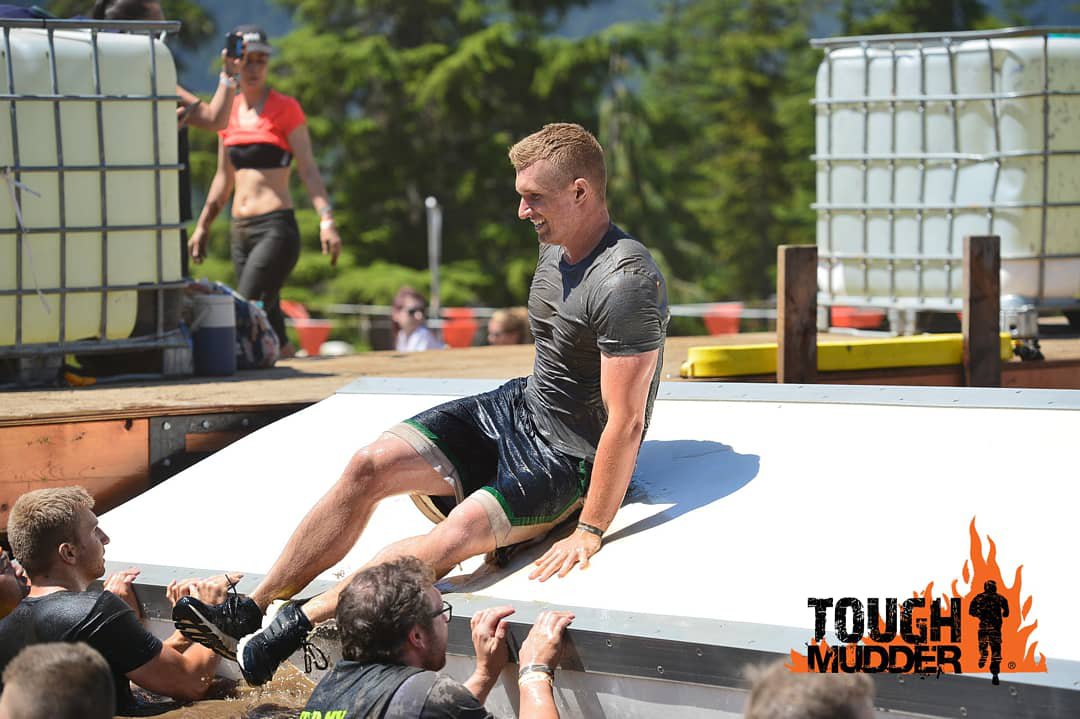
Finding your right Activity!

Let’s get real…

Most people do not want to engage in something they don’t enjoy. Especially when they are committing their free time to it. By nature we all want to have fun and live a happy life.Then we are expexted to maintain our bodies.

Exercise is obviously very important to longevity and well-being, but the traditional gym workouts aren’t for everyone. That doesn’t mean lifting weights and spending hours on the treadmill is the only way to do it.

How do we target this problem?

We have to be innovative. Be honest with ourselves with what it is we want to do.

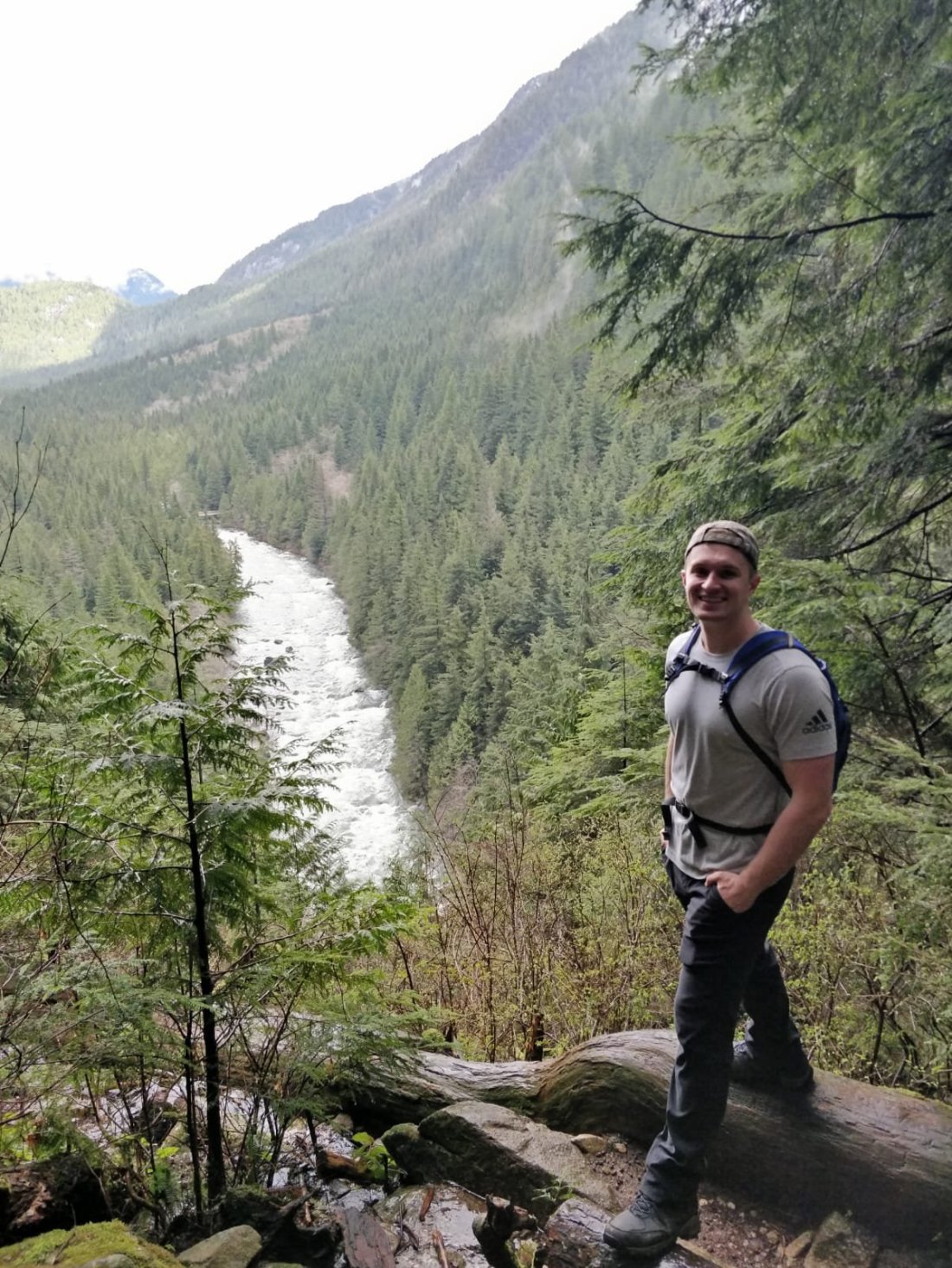
I personally really dislike doing gym based cardio. A couple years ago it became evident that I need to increase my cardio to control my weight (Diets are harder for me to adjust 🙈). So I decided to start hiking. To be honest, it helped that I liked the views to take cool pictures for the gram.

Over the summer I startes hiking every weekend. I went consistently that it became a habbit and within a few months the habbit had become a lifestyle.

I was enjoying it! Cardio, didn’t feel like cardio. My restinf heart rate began to decrease, endurance increased and I was happy.

As I started to do more challenging hikes I realized that my weekly adventures were not cutting it for bringing me to the next step.

I was MOTIVATED.

In order for me to reach a new hiking expertise, I decided I had to train. Going to the gym and doing elliptical, stairclimber and treadmill had a purpose. Once I had a goal to be able to take less breaks on hikes and complete more difficult ones, the gym cardio became easy.

Before I knew it, I began doing additional cardio session 2 – 3 times per week. My body adapted well, and the benefits came along with it.

  • My sleep improved
  • Endurance increased
  • Mental Wellness improved
  • My body fat decreased
  • My heart became strong
  • My mind became sharp

I started to crave the challenge and continue to improve. I now seek out this extra sessions to get better and fulfill my need.

The point here is,

We have to give meaning to everything we do. If being healthy is enough drive, then awesome! To have long term adherence we need to find something we enjoy and want to get better at.

Finding a new activity and creating a habbit takes time and commitment. It gets easier!

Find your function!

Practice it. The rest will follow.

Goodluck!

CB
Training for YOUR Own Goals

Specificity

This concept is training for a specific outcome. If you want to increase your endurance, you need to train for endurance.

The four main ways you can weight train include endurance, hypertrophy, strength and power. For sake of simplicity, I will offer set numbers for reps and sets to help describe how to train for each modality.

Endurance:
This refers to muscular endurance. Even though it will have some benefits for your cardiovascular system, it will not result in huge increases of VO2max. Endurance weight training will help improve your muscular function during repeated bouts of sub maximal load. Such as required in cycling or boxing. Muscle fibers will become what is called “Type 1” or “slow twitch”. This fiber type is fatigue resistant. Meaning it can last a lot longer during exercise. However, it is not as strong or fast.
To train for endurance, 3 sets of 20 reps at 60% of your one rep max on desired weight exercises

Hypertrophy:
Arguable why most people weight train now a days is to increase muscle size. This exercise style focuses on increasing the size of the muscle fibers. Normally, it is the “Type II fibers” or the “Moderate to fast twitch” fibers that will have the most increase in size. To have the most benefit of training to increase muscle size you should be aiming to do 4 sets of 12 reps for 80% of your one rep max.

Strength:
This is the absolute amount of strength. So, how much weight can someone lift. Another highly popular reason why people weight train. This targets the same muscle fibers as hypertrophy, except it is more focused on the tensile strength of “sarcomeres”. This training style is actually what most people consider power lifting. Training to increase strength you want to focus on 5 sets of 3 reps at 90% of your one rep max.

Power:
This one is often confused with strength. The subtle but VERY important difference is power has a SPEED component. This means that it is not so concerned about how much weight you can lift but how FAST can you lift that weight. This type of weight training benefits explosive athletes well who need to have immediate reactions and quick starts. It focuses on the “Type IIx” or “Fast twtich” muscle fibers. To train for power you want to focus on 4 sets of 6 reps at 60% of your one rep max.

Any questions please send a message!
Any suggested edits please let me know where I went array 🙂

Thanks!

CB

What is ‘Fitness’?

The first thing the probably comes to mind when you hear this question is an image of people who are really lean with have high muscle definition. How accurate is this?

In other fields, such as biology, fitness defined is a species ability to reproduce (so I guess all humans are pretty fit).

Looking at exercise physiology and their definition of fitness and comparing it to what people assume it is (having a six pack, giant biceps and chiseled chest) you begin to realize that our image of fitness is not correct. And what is advertised as fitness in the media – is really ‘Gym Fit’.

The true definition of fitness when looking at exercise physiology is “How well a person can perform a task” ie, how fast are they, how high can they jump, how long can they run, how much can they lift, are all simple examples of tasks that can show how fit an individual is.

Compare a world class sprinter to a world class marathon runner. First thing you notice is how their bodies are completely different. On top of that, their physiology is way different. The sprinter has more muscle mass composed of fast twitch fibers with a high alactic anaerobic ability, while the marathon runner has high aerobic ability. Two completely different energy systems being used, yet these people are both the most fit in their respective sports.

My point I am trying to get at is that fitness should be compared to your goals. If you goal is to look chiseled and have high muscle definition, then that is fantastic. If your goal is to be fit in a particular sport, or event, then that is great too. Know that just because you don’t look a certain way, it doesn’t mean you arent fit at what you do.

Hope you enjoyed!

CB

Core Stability

A common mistake practiced throughout the fitness community is improper activation of core muscles when performing various exercises. Improper activation occurs when an individual pushes out their belly during the concentric phase of a lift (when the muscles are contracting) while holding their breath in. This can lead to many problems. Such as, lack of strength and stability resulting in injury, sports hernia from excessive force placed on the abdominals and increased thoracic pressure (affecting respiration), which can also lead to blood vessels in the eyes and head bursting (if pressure is great enough for long enough).

You might ask, “What does your core do and what muscles make up your core?”.

Well first off, core stability is a synergistic function of many muscles working together to maintain the integrity of the spine and visceral (internal) organs while aiding in maximal force production. These muscles include your abdominals (rectus abdominus, external/internal obliques, and transverse abdominus), back muscles (erector spinae, latissimus dorsi, and lower trapezius), and glutes (gluteus maximus, gluteus medius). As you can start to see your ‘core’ goes far beyound just your abs, it involves a full 360 muscular system.

What is proper technique for activating core muscles?

First, core muscles are contracted (tightened) rather than pushed out. Second, a person must exhale during the contraction phase, to decrease thoracic pressure. Lastly, a neutral spine should always be maintained to ensure muscles are at optimal lengths and to decrease the pressure on the vetebral column.

How does core stability increase my performance? Automatically there will be a greater ability to produce more force, ie, lift heavier weights. Having more muscles activated will allow for them to aid in the exercise being performed. This is true for all major core lifts (bench, squat, deadlift, powerclean. Shoulder press etc). It also drastically reduces the chance of injury and fatigue on the working muscles.

Core workouts will be posted later on and will show the best ways to strengthen that region. I hope this was helpful, if anyone has any questions please ask or comment. Feel free to spread the word.

Thank you.

CB